Designing Cisco’s identity platform, unifying authentication across 20+ products into a single experience
Product Cisco Unified Identity
Cisco Unified Identity (CUI), is a platform initiative aimed at unifying authentication and identity access management across Cisco’s entire enterprise ecosystem, helping IT admins manage identity and access from a single, centralized interface.
Problem Disconnected Chaos
Before CUI, IT admins managed user onboarding and access across dozens of disconnected platforms, creating heavy administrative overhead, significant security risks, and IT support reliance.
Solution Centralized IAM
Designed key authentication and onboarding workflows for Cisco’s identity platform, streamlining access management into a cohesive, single-portal experience for IT admins.
Result Single pane of glass
Established Cisco’s consolidated sign-in experience and IAM across 20+ products, scaling CUI’s initial launch to 50k+ admins while significantly reducing administrative overhead and strengthening enterprise security.
Details
Role/Team: Product Designer working with 1 product designer, 2 Product Managers, 6 Developers, and 1 UX Researcher
Contributions: User Research, UX Design, Rapid Prototyping, User testing
Tools: Figma, Figma Make, Miro, Jira, Confluence, Webex, User Testing
Timeline: 6 Quarters
Scope: Enterprise SaaS, Identity Management, Internal Tools, UI/UX Design
Impact
50k+
admins adopted
across Cisco product ecosystem
20+→ 1
identity stacks consolidated
with 45+ identity stacks targeted by the end of year
Self-service
platform to manage users
Unified legacy chaos into a single pane of glass
Cisco Unified Identity (CUI) is an initiative aimed at unifying authentication and identity access management across Cisco’s enterprise ecosystem.
Context
Cisco’s identity ecosystem was fragmented across 45+ distinct platforms, inflating total cost of ownership (TCO) across engineering, licensing, and security.
For IT admins, managing access meant navigating disjointed workflows, inconsistent APIs, and manual setups—driving up operational friction and support volume while slowing Cisco's time-to-market.

IT admins were stuck performing manual, redundant setup cycles — turning routine onboarding into a multi-hour operational drain.
Disconnected platforms compromised security, making universal standards nearly impossible to enforce.
Fragmented systems inflated costs through extensive staff training and constant IT support reliance.
Lack of self-service user management tools forced an expensive, unnecessary reliance on support teams.
Managing dozens of disconnected platforms created a massive operational burden for IT admins.
Problem
Fragmented login experiences make it difficult to enforce consistent MFA policies across the enterprise ecosystemConsolidate fragmented authentication across the enterprise portfolio into a single, secure login standard.
Unify core identity management flows to eliminate app-switching and streamline end-to-end user lifecycle workflows.
Scale Growth: Establish a flexible, modular design to also support future product consumption.
To unify fragmented authentication and core identity flows across products into a cohesive, single-portal experience.
Goals + North Star
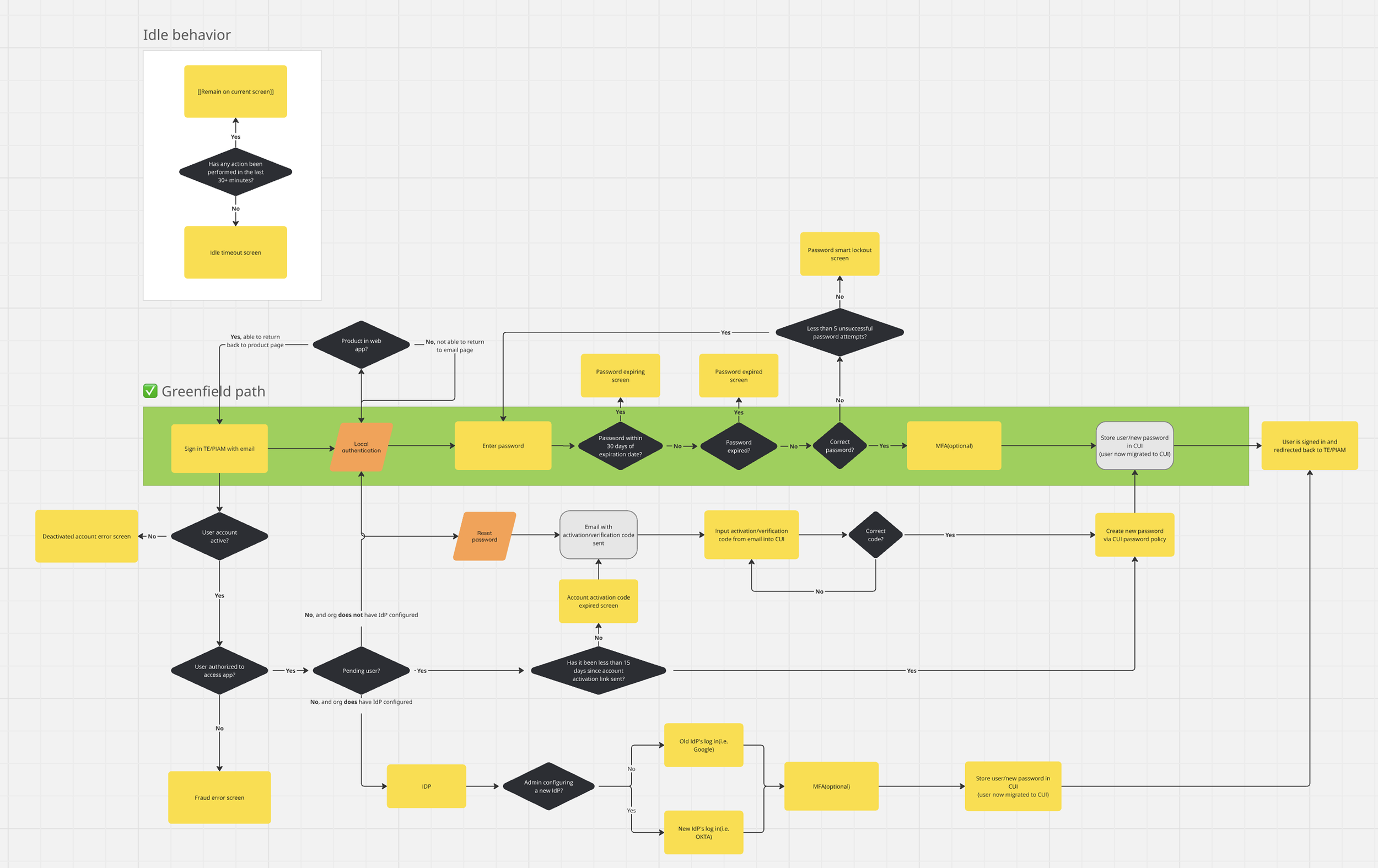
By mapping shared steps across existing products, I established a unified greenfield baseline and systematically identify edge cases across authentication flows.Overcoming these challenges required managing cross-functional trade-offs while maintaining design quality under tight deadlines
Conflicting product priorities to deliver design during a high-pressure build phase.
Steep Domain Learning Curve: Rapidly understanding complex Identity and Access Management (IAM) workflows under aggressive deadlines
Global Team Alignment: Coordinating with engineering teams across multiple timezones for rapid turnaround of new features.
Bridging Design and Engineering: Translating rigid backend security constraints into an intuitive, scalable user experience.
Navigating deep technical complexity and organizational friction at scale.
Challenges
Key Insight 1: Fragmented Ecosystem: Navigating scattered legacy tools forced constant app-switching, disrupting user management workflows every time admins onboarded a new user or team.
Key Insight 2: High Support Dependency & Friction A lack of self-service tools forced admins to rely on Cisco support tickets for routine updates, delaying permission requests and inflating IT support volume.
Key Insight 3: Operational Overhead & Escalating TCO Configuring identity integrations per product and managing access across disjointed APIs significantly inflated Total Cost of Ownership (TCO) while slowing user lifecycle management.
I conducted interviews, competitive analysis, and audits with product teams and IT admins to surface core friction points for a centralized authentication and core identity management experience.
Process + Key Insights
Cisco Unified Identity is an identity access management platform consolidating sign-in and IAM workflows, empowering admins to manage core identity through a centralized hub and embeddable micro-frontend (MFE) widgets across products.
Solution
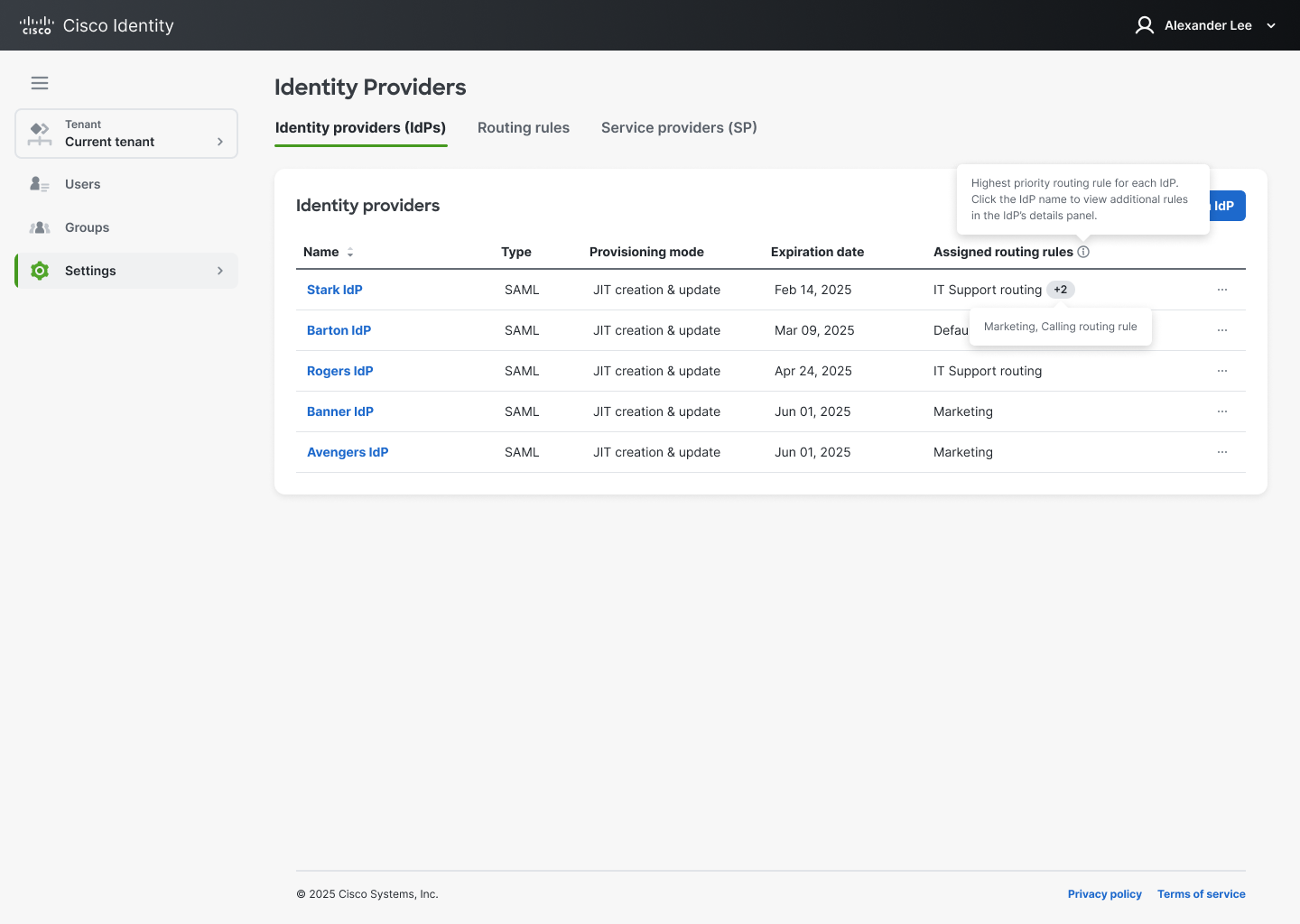
Self-service workflows, like managing IdPs, gives IT admins full operational control; replacing static, error-prone setup forms and IT support tickets with guided, step-through wizard patterns, transforming complex administrative procedures into clear, progressive workflows.
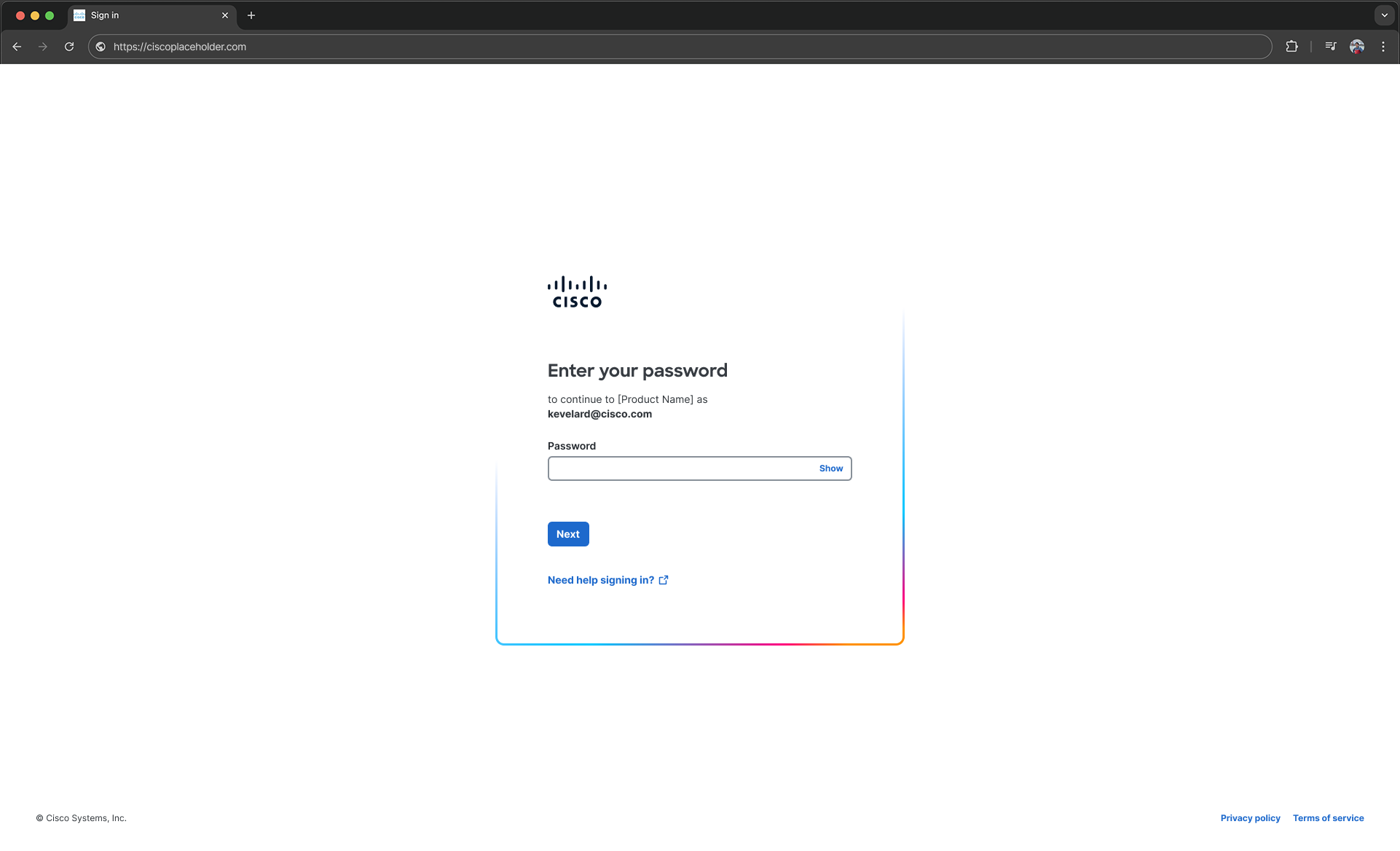
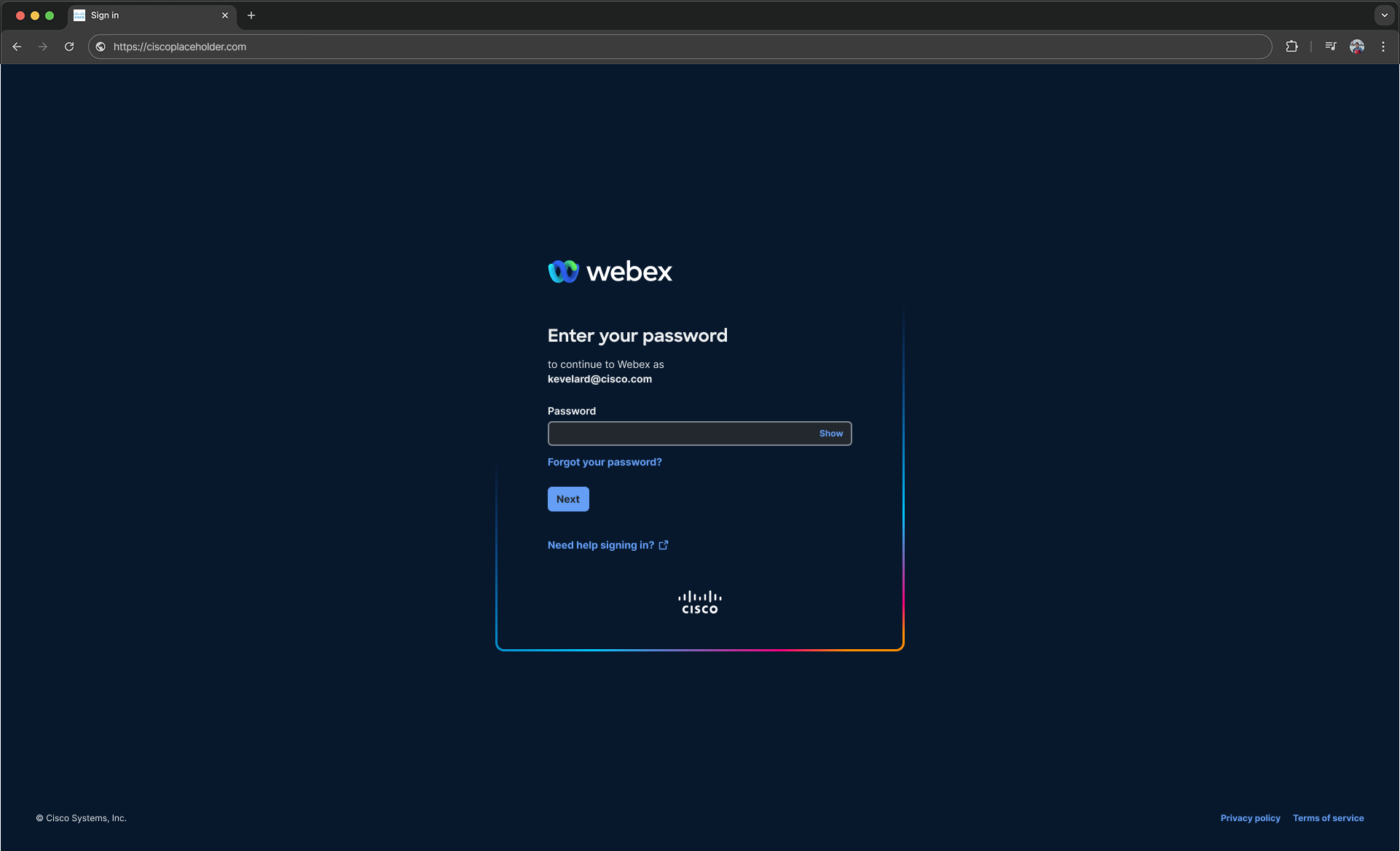
Unifying authentication allowed us to resolve identity context and routing rules at the front door, removing immediate login friction across 20+ products while establishing the core security foundation that the rest of our IAM features relied on.
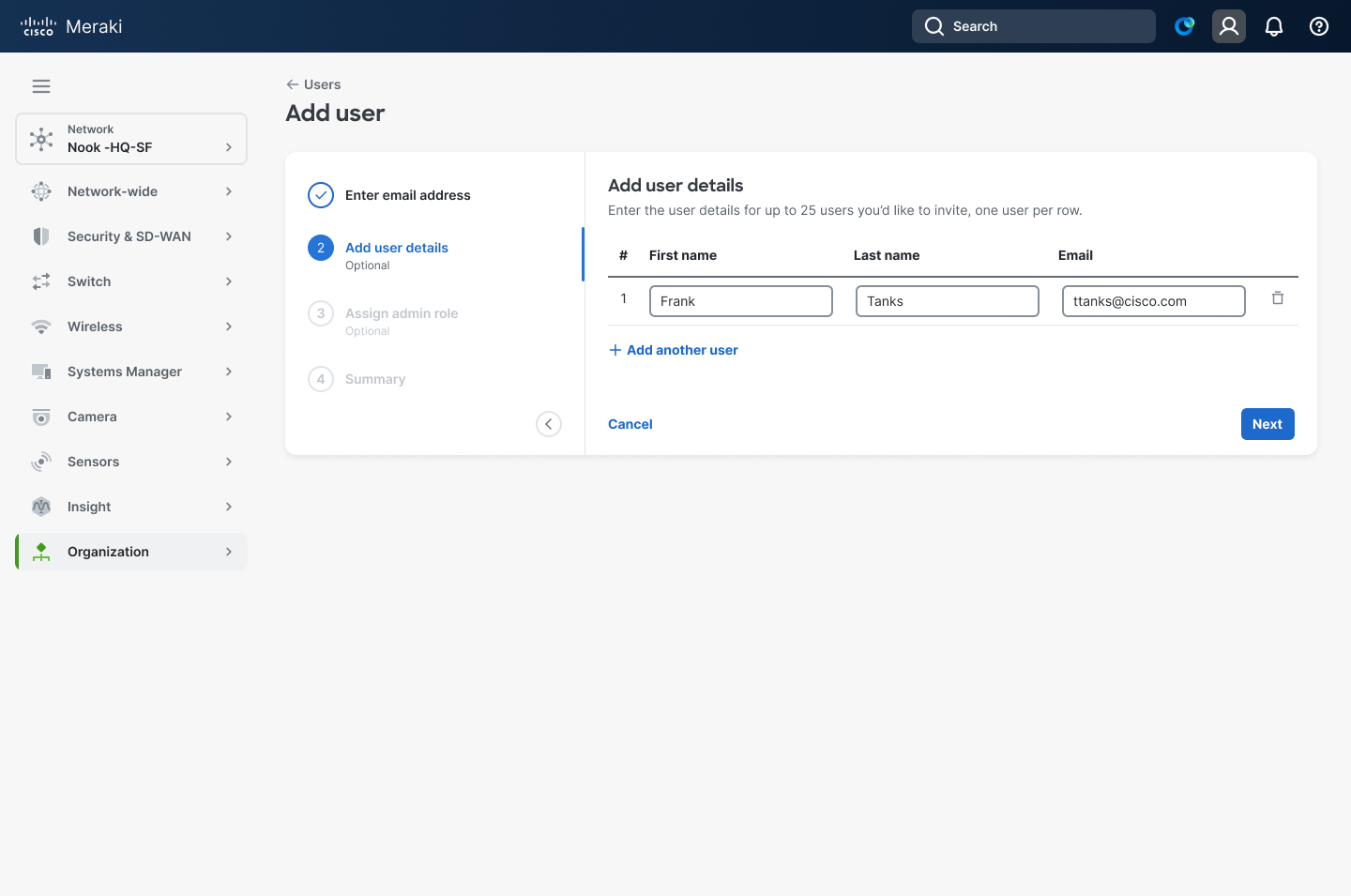
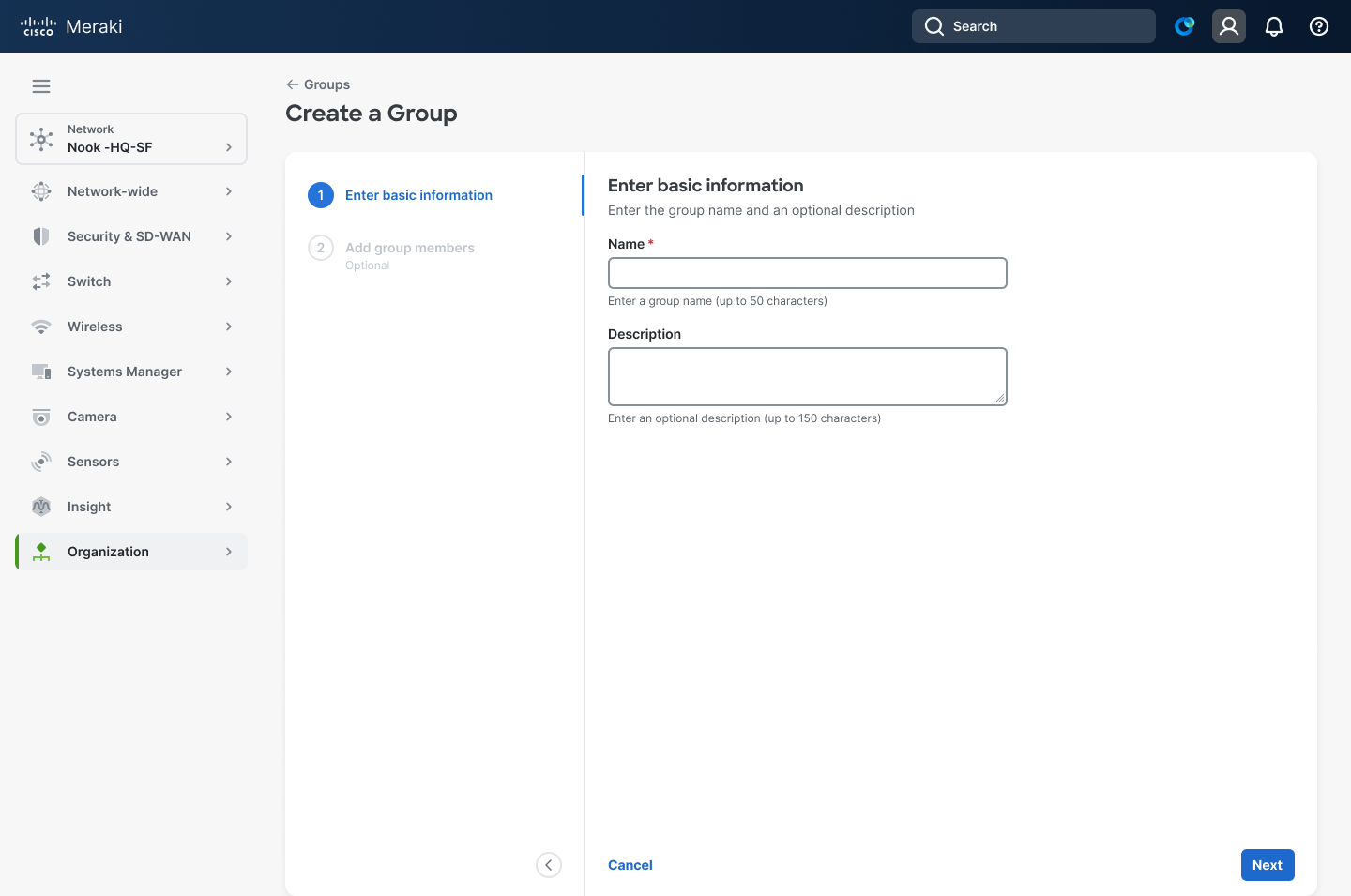
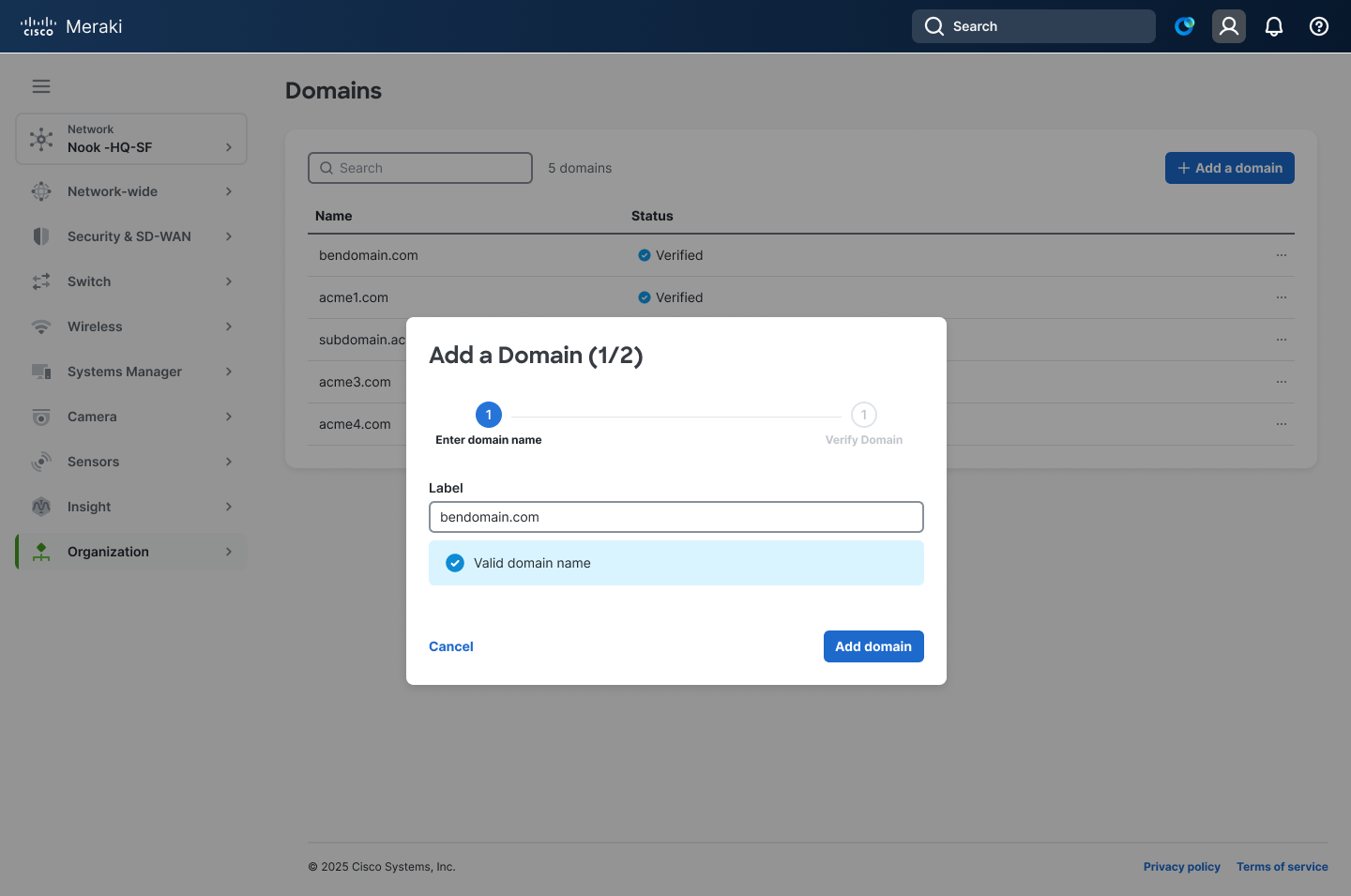
While our focus centered on solving authentication and IdP integration, we also delivered core self-service pillars—User, Group, and Domain Management—to support complete end-to-end admin lifecycles and reduce IT support overhead, streamlining daily operations.
Process is as important as pixels: A robust design process isn't linear—it's an ongoing dialogue. Wireframing, iterating, rapid feedback loops, and ensure design decisions are continuously validated against technical and business constraints before a single pixel is finalized.
Involve key stakeholders early and often: Collaborating alongside design peers and cross-functional partners reinforced the value of shared Figma libraries and regular alignment syncs to maintain complete product cohesion; it’s what transforms complex constraints into aligned, high-quality design decisions and raises collective UX maturity.
Design for system scalability: Building modular, 'plug-and-play' frameworks creates exponential, long-term efficiency for both our end-users and internal engineering teams.